
The Four Books I'm Eagerly Studying Right Now
The missing manuals for desperate times.
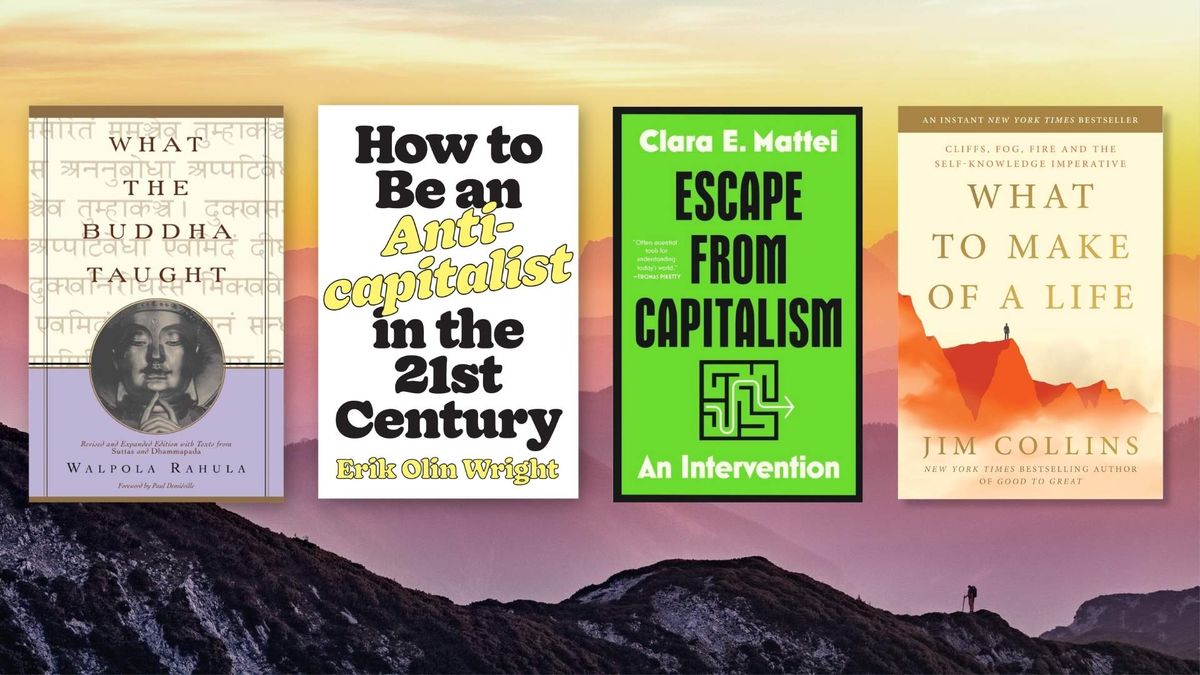
If you know me, then you know I love books. It’s an addiction that runs in my blood. My dad, a decorated soldier, once adored books too. I got it from him.
To my Dad, books were a sort of magic, almost sacred, or at least worth their weight in gold. I’ve come to see it his way. Books can teleport you to far-flung realms, or transmit knowledge and wisdom, even across vast expanses of time and space. To put it bluntly, books will change your life.
But only if you give them a fair chance. I’m reminded of what Thomas Jefferson, a celebrated bookworm, once wrote in a letter to John Adams back in 1815:
“I cannot live without books; but fewer will suffice where amusement, and not use, is the only future object."
I think what he meant is that books are not for mere reading and re-shelving. Books are for chewing on ideas. They’re for wrestling, grappling, and savoring those ideas down to the marrow. Books can make you think deeply about the world, and about yourself. They can teach you new skills and can help you get closer to understanding the truth. In a very real sense, books are the missing manual for life.
Or so it seems to me.
Especially now, as the days darken and the shadows of fascism, violence, and hate grow like a cancer. We need stories, and ideas, and language to understand what has happened to us, and what’s still possible for us as we gaze toward the horizon. So this, above all, is the question burning in my brain: What to do? There just isn't an easy, ready answer to that question. For people of conscience, kind-hearted people, people sensitive to the suffering being inflicted on others, who see where things are headed—what is our path forward?
To lift the fog and try to figure out what life is asking of me—and of you—I do what I’ve always done; what my Dad taught me to do. I turn to great thinkers, and their ideas bound in books.
Right now, there are four books which I am actively reading and grappling with. They are four books, very different in nature, penned by very different people, in different spheres of influence, and in different moments in time. I am not merely reading them, I’m studying them. They’re helping me come up with the answers I need and this is bringing me a measure of peace and clarity. I think of these books as beacons of hope helping me make my way through the thick fog. I share them with you in the hope that they may also light your path.
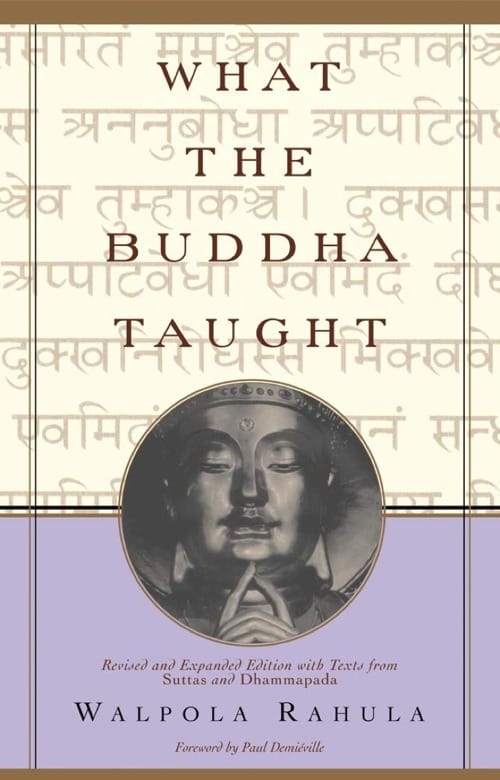
What the Buddha Taught
The Buddha was one of the most powerful thinkers in human history. Inner peace eludes us, he said, because we are too easily ensnared by our thoughts, emotions, and other attachments. These attachments cloud our vision and cause us to suffer and, even more tragically, to inflict suffering upon others.
So, if we are to make the world a better place, does that effort not start with cultivating our own inner peace, like the venerable monks I told you about several weeks ago?
What the Buddha Taught, written by the venerable Walpola Rahula, is an accessible, no-nonsense, no-fluff (no woo-woo) explanation of what the Buddha actually taught, not what Western gurus claim he taught. Trying to understand Buddhist teachings is not an act of religiosity either, it is about striving to end our own suffering. The Buddha rejected all forms of orthodoxy, violence, and coercion. Consider, as the author does, that not a single drop of blood has ever been spilled trying to convince any person of the superiority of the Buddha’s belief system. Instead, as the Buddha said, you need to see for yourself. All are invited and encouraged to explore in search of the truth. Awakening, or at least achieving a more enlightened understanding of reality, is possible for any person who commits to walking the path. And many Christians walk that path, preserving their own faith even as they study the wise words of the Buddha. There is no conflict or tension there, unless one strives to manufacture it.
I confess studying this book with a sense of urgency. I can’t help but think that in a world of growing ignorance, greed, hatred and death, developing the practice of cultivating inner peace is of the utmost importance. It’s part of the medicine direly needed to counteract the effects of deteriorating circumstances. I present it to you in the spirit of these lines from J.R.R Tolkien:
“May it be a light to you in dark places, when all other lights go out.”
Escape From Capitalism and How to be an Anti-Capitalist in the 21st Century
It has become clear to me that to continue to play by the rules of capitalism today is to engage in the realization of our own enslavement and oppression. I know that sounds harsh, but let the record show that I have hitherto tried to play by the rules of the "capital order."
That's because I was indoctrinated young, as we all were.
I grew up in the 1980s watching Robin Leach’s Lifestyles of the Rich and Famous and gleefully suffering through “caviar dreams and champagne wishes.” I may even have defended Gordon Gecko a time or two, agreeing that a little “greed is good” and that “maximizing profits and shareholder value” is as American as American gets (and ergo a splendid thing). And the daydreams that played on endless loop in my young brain were of the “Think and Grow Rich” variety, featuring testosterone-laden capitalist fantasies.
But fast-forward to 2026. Where are we? What have we got? How has our blind allegiance to capitalism and its rules been rewarded?
The answer is dead simple: we’ve been rewarded with truly monstrous inequality; and a voracious greed threatening to eat the world whole (if its leaders don't destroy it first).
As reported in The Guardian from data in the 2026 World Inequality Report:
Fewer than 60,000 people – 0.001% of the world’s population – control three times as much wealth as the entire bottom half of humanity…inequality has reached such extremes that urgent action has become essential…
This situation is completely untenable which is why I feel it's our duty to detach from this system. Capitalism has mutated into a ravenous thing that feasts on limitless avarice and excretes poverty, destitution, division, and death along its path. Whatever gains capitalism bestowed upon humanity, and they were admittedly many, it now seems to be busily reversing or erasing.
It used to be, for example, that capitalism was about competing with gusto and trying to win at the game of business. But no more. As Peter Thiel has noted, competition is for losers. The name of the game now is domination. Monopolization. Destroying others ability to compete. Or, as even Trump proclaimed in recent public remarks, straight up piracy!
Is it any surprise that capitalism, with its extractive ways, has turned fascist and uber-murderous as it desperately tries to defend itself from actual and would-be opponents? Capitalism as practiced today not only devalues the labor of human beings, it has devalued human beings altogether, snuffing out the vulnerable and powerless, or anyone with the temerity to stand up and oppose it’s corrupt ways and means. How can we continue to play a game completely rigged against us? A game rigged against our children, and their children?
When, if not now, will we muster the courage to unite and stand up together for our principles?
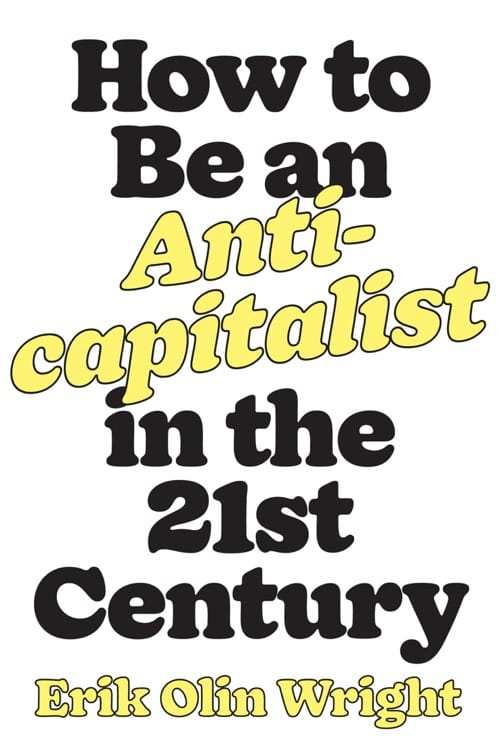
Fortunately, it’s not all doom and gloom. We are not, in fact, powerless. The late professor, Erik Olin Wright, in his final work published in 2019, How to be an Anti-capitalist for the 21st Century, lays down an invaluable and clear argument, not only for why change is direly needed, but also for the shape that such change might take. His book is a call to action and can form a foundation for our work as entrepreneurs, small business owners, and solopreneurs who wish to operate outside the empty promises and corrupting lies of capitalism. Not only can it be done, it’s already happening all over the world, as the professor clearly shows. We can, for example, form companies where workers are also the owners and profits are invested in the collective good.
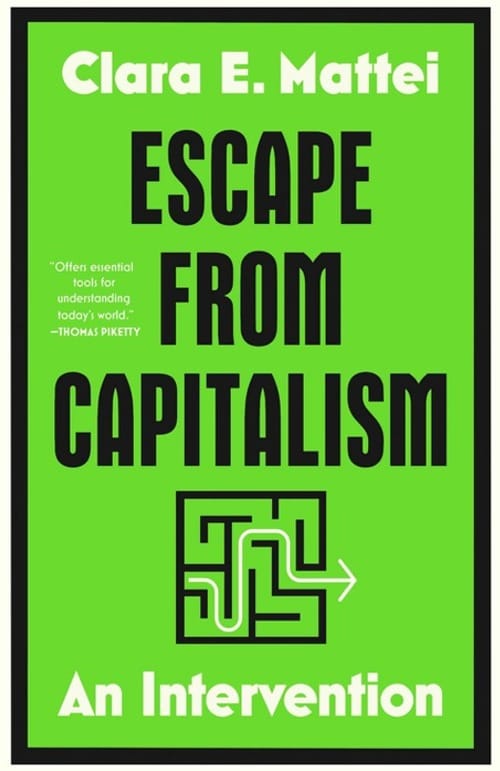
Sadly, Professor Wright is no longer with us, but a new and innovative voice has taken up the mantle. She is Clara E. Mattei, Professor of Economics and Director of the Forum for Real Economic Emancipation at the University of Tulsa, Oklahoma. Her new book, Escape From Capitalism: An Intervention continues on the trail blazed by Prof. Wright and updates it, arguing that capitalism is just an economic model, a set of choices we’ve made, and thus in no way pre-ordained or inevitable. She goes further to argue that individuals can, as history has clearly shown, reclaim the power to change their economic lives from what she has termed, the capital order. The fact that Mattei, an Italian descendant of fervent anti-fascists, is teaching in Tulsa, not far from historic Greenwood (also known as Black Wall Street), could not be more fitting.
Both Wright and Mattei are teaching us a new language—the language of an anti-capitalist. This is helping me see my role as an entrepreneur, and a teacher of entrepreneurs, with a fresh new perspective that is at once exciting and invigorating. There is indeed a better path and you and I can, if we so choose, lead the way.
What To Make of a Life
For over 20 years, Jim Collins has held the imaginations and rapt attention of CEOs, C-Suite execs, middle managers, start-up entrepreneurs and even public sector leaders hungry to understand how to build organizations and teams that aren’t merely good, but great.
For me, it’s been at least 15 years (since the publication of How the Mighty Fall) that Collins has published a book that came even close to the ambitious, panoramic scope, meticulous research, and enduring wisdom of “Good to Great.” But the book that Collins has just published, What to Make of a Life: Cliffs, Fog, Fire and the Self-Knowledge Imperative may go down as arguably his most authentic, and powerful work yet.
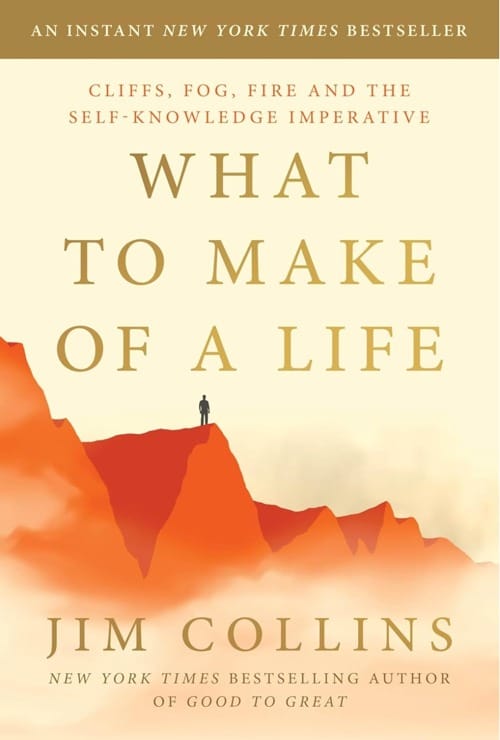
And quietly, sneakily, subversive. And dare I say it: perhaps a tad bit anti-capitalist?
That's because after 11 years of meticulous research on the the lives of 34 exceptional human beings, including John Glenn, Toni Morrison, Alan Page, and Tenley Albright, Collins concludes the following:
The people in our study flipped the arrow of money, money became a means to work. And they made this shift because they embodied an unusual definition of work. For the people in this study, their true work could best be defined as pursuit of excellence in a hedgehog.
A "hedgehog" is Collins-speak for pursuing work that taps into your innate, natural gifts (or "encodings" as he calls them) and focuses your inner fire." Money is downgraded to a resource needed for you to pursue excellence in your work, not the other way around. This is subtly revolutionary. Money and profits are for fueling the work of using your gifts with as much excellence as you can muster for the collective good of the people you care about. To make a priority out of lusting after money and using capital to squeeze laborers in ruthless pursuit of profit is not the game that any of the great people Collins studied actually played.
Collins has helped me see that I have deprecated and distrusted many of my natural encodings, that I have not pursued my personal hedgehog, and that my activities have too often put me “out of frame” with who I really am. Collins has lit a massive fire under my behind as I am now getting more clear about what my work needs to be in the years to come. But of course, this is a process and I'm still learning...about myself. This is Collins' self-knowledge imperative and I receive it. Because there is nothing more anti-capitalist than having the guts to be who you really are (not the pawn the capital order needs you to be) and striving, not for wealth, power, or profits, but to be the best human being you can possibly be and do the excellent work you were meant to do.
Okay—what next?
Alright dear reader, I’ve done my part. I’ve pointed you in the direction of four excellent books that can make you re-think the caravansary that is life and how you might be able to better enjoy your stay, even as storm clouds gather. These four works form a seemingly disparate but surprisingly synergistic medicine for our times; all courtesy of an ancient spiritual teacher, a sociologist, an economist, and a business management researcher.
So, what to add but this: take Thomas Jefferson's advice and don't just read for amusement, use what you read to elevate your life. I challenge you to explore the ideas in these books and imbibe liberally of their wisdom. If you'd like, we can even do so together! So let me ask you:
Do any of these books sound interesting to you? If so...
If I started a Striver Confidential Audiobook Club, so we can explore these ideas in much greater detail, would you be interested in participating?
Please let me know in the comments.